


Description
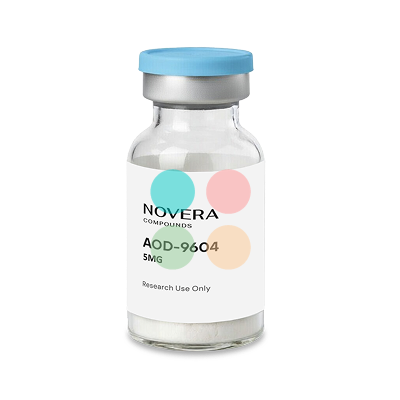
Weight loss injections are surely a new trend nowadays. Various metabolic research groups develop new products, focusing on different formulations, experimenting with active substances, mechanisms of action, and other factors crucial to treatment outcomes. One of the peptides known for its body fat reduction is AOD-9604. Its research use demonstrated impressive results in preclinical studies, and although it is not approved as an official weight management peptide, it’s still widely used off-label.
This article explores the science, applications, and professional benefits of AOD-9604. All details on this webpage are provided for informational purposes only, to help medical professionals access more extensive data for analysis.
General Information About AOD-9604
AOD-9604 is a synthetic peptide fragment derived from the C-terminus of human growth hormone (GH), particularly from amino acids 176-191. The product originates from Monash University in Australia, where it has been developed to boost one’s metabolic health: it has a fat-reducing effect of GH and stimulates lipolysis without the growth-promoting activities.
AOD 9604 has a defined structure that helps laboratories design repeatable studies under clear and stable conditions. It is believed to mimic lipid metabolism, but without the IGF-1-stimulating effects. Instead, it enhances lipolysis (fat breakdown) and inhibits lipogenesis (fat formation) without affecting blood sugar levels. Fat storage breakdown is mediated by beta-3 adrenergic receptors.
AOD-9604 Use in the Research Setting
AOD-9604 is commonly found as a freeze-dried (lyophilized) powder for subcutaneous injection as well as in oral capsules or sublingual troches. Still, this peptide is available for research and laboratory use only and should be studied by qualified professionals. Below, we determine the leading testing of AOD-9604.
#1. Weight Loss and Fat Breakdown Properties
AOD-9604 demonstrated beneficial effects in subjects during the extensive research. The peptide has shown a significant effect on fat metabolic function through stimulation of lipolysis (fat breakdown) and inhibition of lipogenesis (fat formation) in adipose tissue. The main benefit is that it didn’t have any diabetogenic effects typically associated with GH. Its lipolytic mechanism does not stimulate IGF-1 production or cause insulin resistance, which is highly relevant to obesity research in insulin-resistant individuals. Studies also suggested that AOD-9604 may improve cholesterol profiles and glucose tolerance in obese subjects.
#2. Cartilage Repair
Although AOD-9604 has been primarily studied in metabolic research, the peptide demonstrated unexpectedly impressive regenerative properties in cartilage tissue, leading to its regulatory approval in Australia for osteoarthritis treatment. AOD-9604 may stimulate the production of proteoglycan and collagen in chondrocytes, which are important for cartilage health. It showed higher production of type II collagen and aggrecan, which are among the main structural components of the healthy cartilage matrix. Animal studies in the osteoarthritis branch demonstrated lower cartilage degradation scores, better joint function, and lower inflammatory markers. AOD-9604 modulates cartilage metabolism, benefiting knee osteoarthritis treatment, joint preservation strategies, and cartilage repair for sports medicine applications.
Important to Know:
The World Anti-Doping Agency (WADA) has banned AOD-9604 for use in sports.
#3. Bone Metabolism Enhancement
Newer research suggests AOD-9604 may have positive effects on bone metabolism, which may share similar regenerative mechanisms with its cartilage repair properties. Preliminary studies in animal models demonstrated strong effects on osteoblast activity and bone mineral density, suggesting that AOD-9604 preserves some GH anabolic effects on skeletal tissue without growth-plate stimulation. This indicates the probability of enhanced bone turnover markers and a boost in bone strength in osteoporosis models, though the mechanism remains under investigation. The peptide may assist in the differentiation of adipose mesenchymal stem cells into bone cells. Once this data had been obtained, AOD-9604’s research applications expanded to incorporate osteoporosis prevention studies, bone healing research, and a deeper understanding of fat metabolism and skeletal health, which may lead to more versatile use of the peptide.
#4. Selective Growth Hormone Benefits
According to studies, and it’s one of the most promising AOD-9604 features, the peptide selectively reproduces growth hormone’s fat-reducing properties without stimulating diabetogenic effects. It doesn’t increase IGF-1 levels significantly, thus avoiding the tissue growth stimulation and reducing cancer-promoting concerns that are typically associated with constant growth hormone therapy. The effect on fasting glucose and insulin sensitivity remains neutral, making AOD-9604 suitable for obesity research in models at risk of diabetes.
Reviews
There are no reviews yet.