
Hyaluronidase
Buy Hyaluronidase Online: The Essential Reagent for Hyaluronic Acid Fillers
Welcome to the hyaluronidase wholesale catalog at FillerSupplies.st. Widely recognized as a mandatory emergency reagent and corrective tool in the field of aesthetic medicine, this highly effective enzyme allows practitioners to safely degrade and reverse hyaluronic acid (HA) based dermal fillers. Whether you are correcting aesthetic asymmetry, treating the Tyndall effect, or managing severe complications such as vascular occlusion, maintaining an active, non-expired stock of hyaluronidase in your clinic is a non-negotiable standard of care. Please note: All products in this catalog are strictly intended for licensed medical professionals and authorized clinics.
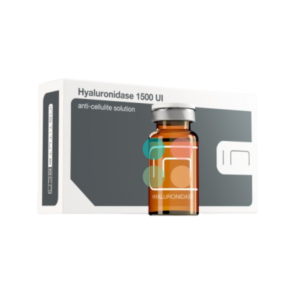
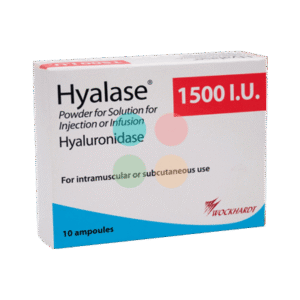
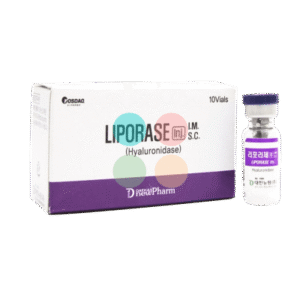
If you are looking to buy hyaluronidase online, Filler Supplies offers the industry’s most trusted brands—including Liporase, Hyalase, and Hylase Dessau—at highly competitive wholesale rates. Equip your practice with the ultimate hyaluronic acid dissolver to guarantee patient safety and achieve flawless aesthetic outcomes.
What is Hyaluronidase? An Essential Clinical Overview
Hyaluronidase is a naturally occurring endoglycosidase enzyme that depolymerizes hyaluronic acid. In cosmetic dermatology and plastic surgery, it is utilized as an off-label but universally accepted “antidote” to HA dermal fillers. Because modern fillers are composed of cross-linked HA suspended in physiological buffers, the injection of hyaluronidase acts rapidly to break the bonds holding the filler matrix together, transforming the gel into a liquid that the body can quickly resorb and excrete.
While an HA dermal filler can last anywhere from 6 to 24 months depending on its cross-linking technology (e.g., Vycross, NASHA, or IPN-Like tech), a targeted hyaluronidase injection can dissolve unwanted filler in a matter of hours or days. Beyond aesthetic correction, it is the primary medical intervention for filler-induced emergencies, such as impending tissue necrosis resulting from accidental intra-arterial injection.
Composition & Enzymatic Technology
Hyaluronidase formulations are available globally under various trade names, but all share a fundamental mechanism of action. The enzyme itself is typically derived from varying sources and purified for human medical use:
- Ovine (Sheep) Derived: Highly purified extracts used in prominent brands; known for excellent efficacy in breaking down robust, highly cohesive fillers.
- Bovine (Cow) Derived: Often utilized in older formulations; highly effective, though carrying slightly different allergenic profiles.
- Recombinant Human Hyaluronidase: Synthesized in laboratories to mimic native human enzymes, offering a lower risk of allergic reactions and neutralizing antibodies, though often at a higher price point.
The enzyme is quantified in International Units (IU), typically ranging from 150 IU to 1500 IU per vial. Most products are delivered as a sterile, lyophilized (freeze-dried) powder that must be reconstituted with sterile physiological saline (0.9% NaCl) or bacteriostatic saline prior to administration.
Hyaluronidase Range & Top Brands
At FillerSupplies.st, we provide bulk access to the most proven and globally recognized hyaluronidase products. Below is a comparative overview of standard clinical variants:
| Brand / Product Name | Active Concentration | Source Origin | Pack Size | Primary Indications |
|---|---|---|---|---|
| Liporase (Daehan New Pharm) | 1,500 IU per vial | Ovine (Highly purified) | 10 vials per box | Aesthetic correction, dissolving HA filler, emergency ischemia reversal. |
| Hyalase (Sanofi / Wockhardt) | 1,500 IU per ampoule | Ovine | 10 ampoules per box | HA dissolution, promoting absorption of subcutaneous fluids (hypodermoclysis). |
| Hylase Dessau (Riemser) | 150 IU / 300 IU per vial | Bovine | 10 vials per box | Precision micro-corrections, superficial lumps, periocular Tyndall effect. |
| PBSerum HA1500 | 1,500 IU per vial | Recombinant / Synthetic | 10 vials per box | Advanced aesthetic protocols, reducing fluid retention, dissolving stubborn gels. |
Indications & Treatment Areas
For practitioners administering dermal fillers, hyaluronidase provides critical flexibility and safety. The primary clinical indications include:
- Emergency Resolution of Vascular Occlusion: Accidental intra-vascular injection of HA can cause severe ischemia, blindness, or tissue necrosis. High-dose hyaluronidase is the immediate, golden-hour treatment to re-establish blood flow.
- Correcting Overfilling & Asymmetry: Used to dissolve excess product when a patient is unhappy with the aesthetic result (e.g., to dissolve lip filler migration or over-augmented cheeks).
- Resolving the Tyndall Effect: Formulated for superficial HA placement under thin tissue (especially in the tear trough), which causes a bluish discoloration.
- Treatment of Granulomas and Nodules: Dissolving delayed-onset localized inflammatory reactions or sterile abscesses associated with hyaluronic acid accumulation.
- Improving Local Anesthetic Spread: Historically used in ophthalmology and dermatology to increase tissue permeability for the faster dispersion of local anesthetics (e.g., retrobulbar blocks).
Mechanism of Action: How Hyaluronidase Works
Hyaluronidase functions as an extreme catalyst for the degradation of HA. It cleaves the glycosidic bonds—specifically the 1,4-linkages between glucosamine and glucuronic acid within the hyaluronic acid chain. By severing these polymeric bonds, the enzyme drastically lowers the viscosity of the dermal filler gel.
Once depolymerized, the cross-linked BDDE matrix collapses. The body’s native lymphatic system subsequently clears the broken-down liquid particles naturally. Because different filler brands employ varying proprietary cross-linking technologies, the resistance to hyaluronidase varies. For example, highly cohesive, tight-matrix fillers like the Vycross range generally require higher dosages and longer contact times to dissolve compared to biphasic technologies like NASHA.
Clinical Advantages & Benefits
Procuring high-quality hyaluronidase for your clinical toolkit provides multiple advantages:
- Immediate Action: The enzymatic breakdown begins within seconds of contact with HA. Visible deflation of overcorrected tissue often occurs before the patient leaves the clinic.
- Unmatched Safety Net: Provides unparalleled peace of mind when performing high-risk injections (e.g., nose remodeling, piriform fossa, glabella).
- Customizable Reconstitution: The lyophilized powder format allows practitioners to adjust the dilution ratio—creating highly concentrated mixtures for emergencies, or highly diluted mixtures for delicate micro-corrections in the tear trough.
- Restoring Anatomy: Allows for a complete “reset” of the facial anatomy for patients who have suffered from years of filler stacking or poor injection techniques at other facilities.
Injection Technique & Dosing Guidelines
Administration must be customized based on the nature of the HA filler, the volume injected, and clinical urgency. Standard reconstitution involves injecting 1ml to 10ml of sterile bacteriostatic normal saline into the 1,500 IU vial. Using bacteriostatic saline is highly recommended as the benzyl alcohol acts as a mild local anesthetic, significantly reducing injection sting.
Elective Dissolution (Nodules, Tyndall, Asymmetry)
For non-emergency corrections, practitioners typically utilize specialized fine needles (30G or 32G) for precise placement. Low-dose protocols (e.g., 10-30 IU per injection point) are applied to avoid dissolving endogenous hyaluronic acid excessively. Subdermal or supraperiosteal placement should match the anatomical plane of the original filler injection.
Emergency Dissolution (Vascular Occlusion)
In cases of ischemia, the High-Dose Pulsed Protocol is medically advised. Clinicians should flood the affected area and the course of the compromised vessel with high concentrations of hyaluronidase (often 500 to 1,500 IU immediately) using a cannula or multiple needle injections. Hourly evaluations and re-injections are required until capillary refill is fully restored.
Onset, Duration & Longevity
The onset of action for hyaluronidase injection is virtually instantaneous. In high-concentration applications, practitioners can palpate the softening of the HA bolus within minutes. Despite its aggressive onset, hyaluronidase has an extremely short half-life in human tissue—lasting only 2 to 3 minutes. However, its depolymerizing effect endures, and the filler continues to visibly degrade over the subsequent 24 to 48 hours.
It is strongly recommended to wait a minimum of 14 days after utilizing a hyaluronic acid dissolver before attempting to reinject new dermal filler into the same anatomical zone. This ensures all residual swelling has resolved and the enzyme is completely inert, preventing it from prematurely breaking down the new filler.
Side Effects, Contraindications & Safety Protocols
While generally safe when utilized by trained professionals, hyaluronidase carries specific safety parameters. Because most commercial brands (e.g., Liporase, Hyalase) are derived from ovine or bovine sources, there is a recognized, albeit low, risk of hypersensitivity or anaphylaxis (estimated at roughly 0.1%).
- Patch Testing: For elective cases, many regulatory guidelines suggest an intradermal patch test on the forearm (injecting ~3 IU reconstituted solution) and observing for 20-30 minutes for a wheal-and-flare vascular reaction.
- Common Side Effects: Localized bruising, temporary stinging at the injection site, transient edema (swelling), and minor erythema.
- Contraindications: Patients with a known severe allergy to bee or wasp stings may cross-react with hyaluronidase. Avoid injecting into areas with active infections to clear the risk of spreading the pathogen through compromised tissue planes.
Storage, Shelf Life & Reconstitution Handling
Proper storage is imperative for maintaining enzyme viability. Most un-reconstituted, lyophilized powders must be stored in a cool, dry place securely below 25°C, away from direct sunlight. Certain premium or recombinant brands may require constant refrigeration (2°C to 8°C). The standard shelf life of a sealed vial is generally 2 to 3 years from the date of manufacture.
Once the powder has been reconstituted with saline, the enzyme’s stability rapidly declines. It is a strict clinical standard to discard any unused, reconstituted solution immediately after the patient’s treatment session, or within a maximum of 24 hours if strictly refrigerated, to prevent bacterial contamination and loss of enzymatic efficacy.
Why Buy Hyaluronidase from FillerSupplies.st?
Sourcing your clinical emergency supplies from an established hyaluronidase wholesale distributor ensures you are always prepared while optimizing your clinic’s bottom line. FillerSupplies.st provides:
- Uncompromised Authenticity: All hyaluronidase variants and top brands are 100% genuine, bearing full CE or KFDA certifications, shipped in original packaging with verifiable lot numbers.
- Wholesale Pricing Dynamics: We offer tiered bulk-buy discounts. The more boxes of Liporase or Hyalase you stock, the lower your per-vial cost becomes.
- Dedicated B2B Support: Every clinic receives a dedicated account manager to assist with product inquiries, large purchase orders, and inventory scheduling.
- Discreet & Secure Supply Chain: Our packages are temperature-controlled where necessary, rigorously tracked, and shipped with complete discretion.
Shipping & Payment Information
Filler Supplies guarantees smooth logistics for all medical aesthetic purchases. We offer worldwide express shipping via premium couriers (such as DHL, FedEx, and UPS). Most global destinations receive their parcels securely within 3 to 7 business days from dispatch.
We accommodate multiple secure B2B payment modalities to streamline your procurement. Accepted methods include direct bank wire transfers, major credit cards (Visa, MasterCard, Amex), and leading cryptocurrencies for seamless international transactions.
Frequently Asked Questions (FAQ)
How much hyaluronidase is needed to dissolve 1ml of HA filler?
Dosing is not an exact one-to-one science, as it relies heavily on the specific HA filler properties (composition, cross-linking degree, and phase). Generally, 15 to 30 IU of hyaluronidase is sufficient to dissolve 0.1ml of a basic biphasic filler. Thicker, heavily cross-linked Vycross fillers may require 40 to 50 IU per 0.1ml. A standard 1500 IU vial is generally more than enough to fully dissolve several milliliters of filler.
How soon after dissolving filler can I inject again?
Clinicians are strongly advised to wait a minimum of 14 days before re-augmenting the treated area with new HA dermal fillers. This waiting period allows for the complete resolution of localized swelling and ensures that the injected enzyme is fully degraded naturally, meaning it will not compromise the longevity of the new hyaluronic acid gel.
Do I need to perform a patch test before injecting hyaluronidase?
For elective or cosmetic corrections (e.g., dissolving migrated lip filler), performing an intradermal skin patch test on the forearm is highly recommended to screen for allergic reactions. However, in emergency ischemia or vascular occlusion, performing a patch test is typically bypassed, as the immediate threat of permanent tissue necrosis vastly outweighs the risk of treating an allergic reaction during the procedure.
Does hyaluronidase dissolve natural tissue hyaluronic acid?
Yes, hyaluronidase acts on human native hyaluronic acid as well as synthetic filler. However, this effect is temporary. Because native HA has an incredibly rapid turnover rate in the human body—routinely being synthesized and broken down daily—the body replenishes its own native HA at the injection site typically within 24 to 48 hours without causing permanent volumetric loss of natural tissue.
What is the protocol for vascular occlusion?
In the event of a vascular occlusion, all filler injections must halt immediately. You must utilize a high-dose pulsed hyaluronidase protocol, often injecting 500 to 1,500 IU directly into the ischemic site and tracing the course of the affected artery. This should be combined with warm compresses, aspirin, and vigorous massage to promote blood flow. Repeat hyaluronidase injections every hour until normal capillary refill is completely restored.
How long does reconstituted hyaluronidase last?
Lyophilized hyaluronidase powder is highly stable when unmixed. Once you reconstitute it with normal or bacteriostatic saline, it loses enzymatic viability rapidly. It should ideally be used immediately during the clinical session. Any leftover reconstituted solution must be stored in a refrigerator (2°C – 8°C) and safely discarded after 24 hours.
Ensure the highest standard of patient safety and corrective capabilities in your clinic. Buy wholesale hyaluronidase online today at FillerSupplies.st.
Showing all 3 results